


Implant-Supported Dentures in Florida: A Stable Alternative to Traditional Dentures
Loose or uncomfortable dentures are a common reason patients investigate implant-supported dentures. By anchoring a denture to implants, the treatment can provide additional retention and stability compared with a conventional denture. The design may be removable or fixed, so understanding the terminology is important before choosing a treatment plan.
Dental implants are designed to replace the root portion of a missing tooth and provide support for a crown, bridge, or denture. Unlike a traditional removable denture, an implant is anchored in the jawbone. The treatment is planned around the patient’s oral health, available bone, remaining teeth, bite, aesthetic goals, and overall health. Because implant treatment is surgical, an examination and individualized treatment plan are essential before a dentist can determine whether implants are appropriate.
What Are Implant-Supported Dentures?
Implant-supported dentures use dental implants to provide attachment and stability for a denture. Instead of relying entirely on the gums for support, the prosthesis connects to implants placed in the jaw. Some designs are removable by the patient for cleaning, while other full-arch restorations are designed to remain fixed and are removed only by the dental professional. The exact design, number of implants, attachment system, and denture material depend on the anatomy and restorative plan.
Why Patients Consider Implant Dentures
Traditional dentures can move during chewing or speaking, especially when the lower jaw has limited support. Implant retention can improve stability for appropriately selected patients. An implant-supported removable denture can also be taken out for hygiene, while a fixed full-arch prosthesis offers a different experience and maintenance routine. Patients should understand that implant dentures are still prosthetic teeth and require professional maintenance, periodic adjustment, and replacement of worn components over time.
Removable vs. Fixed Implant-Supported Teeth
A removable overdenture is designed to be removed by the patient, usually for cleaning and while sleeping according to the dentist’s instructions. It attaches to implants using an attachment system. A fixed full-arch restoration is secured to implants and is intended to remain in the mouth. The fixed design can provide a highly stable tooth replacement, but cleaning underneath and around the prosthesis requires specific techniques. The best choice depends on anatomy, hygiene ability, desired function, restorative goals, and budget.
How Many Implants Are Needed?
There is no universal implant count for every denture patient. Some lower removable overdentures may use a small number of implants, while fixed full-arch designs can require a different configuration. Upper and lower jaws also have different anatomy and bone characteristics. The dentist chooses the implant number and positions based on available bone, prosthetic design, bite, force distribution, and long-term maintenance. A consultation should explain why a particular configuration is being recommended instead of presenting a single number as appropriate for everyone.
The Treatment Process
Treatment begins with an evaluation of your existing denture, gums, jawbone, bite, and goals. Diagnostic imaging may be used to plan implant positions. If teeth remain, extraction may be part of the treatment. Implants are placed surgically, followed by a healing period when needed. Depending on stability and the treatment plan, a temporary or provisional prosthesis may be provided. After healing and clinical checks, the final denture is fabricated and adjusted. Follow-up visits help ensure that the implants and prosthesis remain healthy and functional.
Caring for Implant-Supported Dentures
Removable implant dentures should be removed and cleaned as instructed, and the implants and attachment areas need daily attention. Fixed restorations require cleaning beneath and around the prosthesis using tools recommended by the dental team. Professional visits are important because the clinician can check implant stability, gum tissues, bite, attachments, and prosthetic wear. Do not ignore persistent bleeding, swelling, pain, odor, looseness, or a sudden change in the way the prosthesis fits.
Is an Implant Denture Right for You?
Implant-supported dentures may be considered when conventional dentures are unstable, uncomfortable, or difficult to use. They may also be an option after extensive tooth loss. However, surgery is required and some patients need preliminary treatment such as extraction, periodontal care, or bone grafting. A complete consultation should compare an implant-supported removable denture with a fixed full-arch restoration and conventional dentures, including expected maintenance, cost, surgical requirements, and long-term care.
Eating and Speaking With Implant Dentures
Patients often want to know whether they will immediately eat normally after receiving implant-supported dentures. Function usually improves gradually as the patient adapts and the dental team makes necessary adjustments. Early dietary instructions are designed to protect healing implants and tissues. Speech can also require a short adaptation period because tooth position and the shape of the prosthesis affect tongue movement. Follow-up adjustments are normal and can help improve comfort, chewing, speech, and the fit of the prosthesis.
What Happens to the Denture You Already Have?
If you already wear dentures, bring them to the consultation. The dentist can evaluate their fit, tooth position, vertical dimension, and condition and determine whether the existing prosthesis can be modified temporarily or whether a new prosthesis is needed. In some treatment plans, the existing denture may help guide the design of a temporary solution. In others, a new implant-supported prosthesis is fabricated. The transition should be discussed before surgery so you know what you will wear during the healing period.
Implant Retention and Denture Stability
A conventional denture rests on the oral tissues, while an implant-supported denture uses implants to provide attachment and retention. The improvement in stability can be particularly meaningful for patients who struggle with denture movement during speaking or chewing. The exact amount of stability depends on the implant positions, attachment components, denture design, jaw anatomy, and maintenance. Implant retention does not make the prosthesis immune to wear. Attachments can require replacement or adjustment, and the denture itself may eventually need a reline, repair, or replacement.
Patient Checklist Before Treatment
Confirm whether the denture is removable or fixed.
Ask how many implants are planned and why.
Learn the cleaning routine for the attachments and prosthesis.
Ask about relines, repairs, and replacement of worn components.
Discuss alternatives and long-term maintenance.
Planning Dental Implant Treatment in Florida
A Florida implant consultation normally begins with a review of your dental history, an examination of the gums and remaining teeth, and diagnostic imaging when indicated. The clinician may evaluate bone volume, the position of important anatomical structures, the condition of any existing restorations, and signs of gum disease or infection. The final plan can range from a single implant and crown to an implant-supported bridge, removable overdenture, or full-arch restoration. The number of implants and the timing of each stage should be based on the specific anatomy and restorative design rather than a one-size-fits-all formula.
For patients researching dental implants in Florida, location matters for practical reasons: the treatment may involve multiple visits, healing appointments, restorative records, and long-term maintenance. Whether you live in South Florida, Central Florida, North Florida, or elsewhere in the state, look for a practice that explains the complete treatment sequence, the implant system being used, the restorative material, expected healing periods, alternatives, risks, and maintenance requirements. A consultation should give you enough information to understand what is being proposed before you decide to proceed.
Long-Term Care Matters
Long-term implant care is still dental care. Implants cannot develop cavities in the same way natural teeth do, but the tissues around implants can become inflamed or infected, and prosthetic components can wear or loosen. Daily cleaning, professional examinations, and attention to changes such as bleeding, swelling, discomfort, looseness, or difficulty chewing are important. Smoking can interfere with healing, and conditions that affect healing may need to be managed before surgery. Patients should follow the cleaning and follow-up schedule provided by their dental team.
How This Option Fits With Other Implant Treatments
The right implant solution depends on what needs to be replaced. A single missing tooth may be treated with one implant and a crown. Several adjacent missing teeth may be candidates for an implant-supported bridge. Patients who have lost many or all teeth may be considered for an implant-supported denture or fixed full-arch restoration. These options are not interchangeable, and the appropriate design depends on bone anatomy, remaining teeth, hygiene ability, bite, aesthetics, budget, and the clinical findings from an examination.
Single Tooth Dental Implants in Florida: What Patients Need to Know
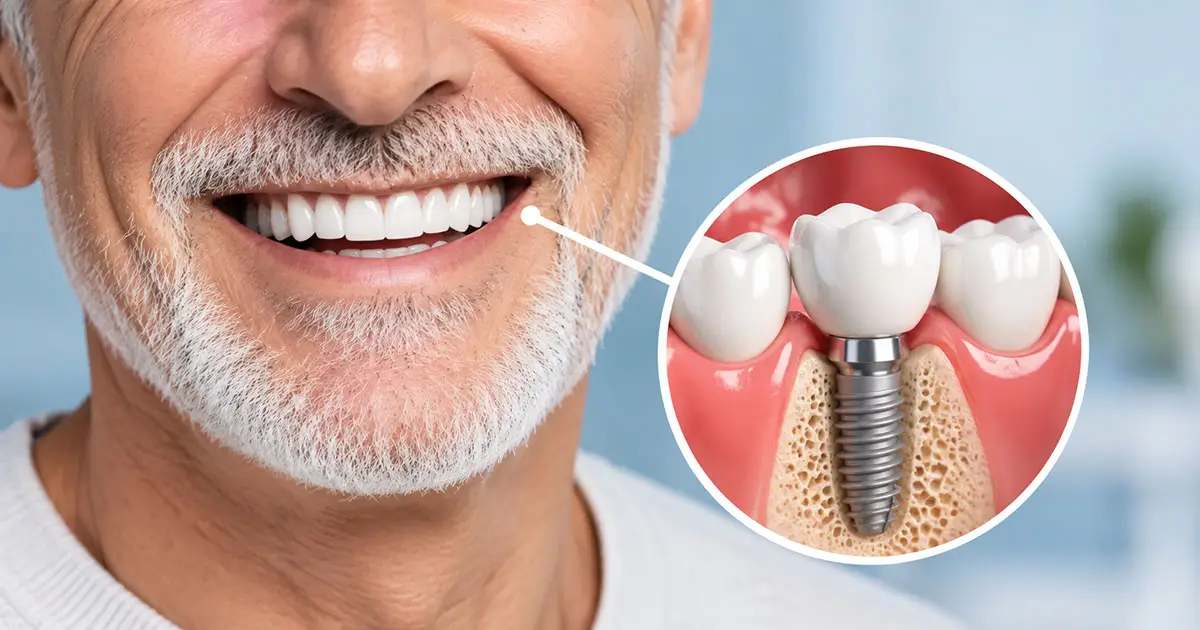
Replacing one missing tooth does not always require a bridge. A single dental implant can serve as an artificial root and support an individual crown. For many patients, this creates a replacement that is independent of the neighboring teeth. The decision still requires an examination of the bone, gums, bite, and overall dental health.
Dental implants are designed to replace the root portion of a missing tooth and provide support for a crown, bridge, or denture. Unlike a traditional removable denture, an implant is anchored in the jawbone. The treatment is planned around the patient’s oral health, available bone, remaining teeth, bite, aesthetic goals, and overall health. Because implant treatment is surgical, an examination and individualized treatment plan are essential before a dentist can determine whether implants are appropriate.
Why Replace a Single Missing Tooth?
A single missing tooth can affect more than appearance. Depending on its location, the gap may change chewing, speech, or how the surrounding teeth contact each other. A single implant is designed to replace the missing tooth root without requiring the neighboring teeth to serve as bridge supports. The visible restoration is usually a custom crown. Whether an implant is the best option depends on the health of the surrounding teeth, bone volume, gum condition, bite, and the patient’s preferences and clinical circumstances.
How a Single Tooth Implant Works
The treatment has three basic components: the implant body, the abutment, and the crown. The implant body is placed in the jawbone and acts as the artificial root. After the site heals and the implant integrates with the bone, an abutment connects the implant to the crown. The crown is custom designed for shape, shade, contact points, and bite. In some cases the abutment and implant may be planned together as part of a specific restorative system.
Single Tooth Implant Candidacy
A dentist evaluates the missing-tooth site and the patient as a whole. Adequate bone is helpful for stable placement, but bone deficiencies can sometimes be addressed with grafting. Healthy gums and good oral hygiene are important because inflammation around an implant can threaten the supporting tissues. The dentist will also consider active decay, periodontal disease, smoking, medical conditions that affect healing, and the position of the nerves or sinus. Imaging helps determine whether the proposed implant position is practical and safe.
Single Implant vs. Traditional Bridge
A traditional bridge replaces a missing tooth by using adjacent teeth as supports. An implant-supported crown instead uses an implant in the missing-tooth site. The two approaches involve different procedures, costs, timelines, maintenance requirements, and risks. A bridge may be appropriate in some situations, particularly when neighboring teeth already need crowns. An implant may be considered when the adjacent teeth are healthy and the patient wants a replacement that does not rely on those teeth for support. Your dentist can compare both options using your specific anatomy and restorative needs.
What Happens After Implant Placement?
Immediately after placement, the implant may not be ready to carry the final crown. The site needs time to heal, and the implant must become sufficiently integrated with the surrounding bone. A temporary tooth may sometimes be used for appearance or function, depending on the location and stability of the implant. During healing, patients are typically given instructions about food, brushing, activity, and follow-up. The final crown is fabricated after the dental team confirms that the implant and surrounding tissues are ready.
Caring for a Single Tooth Implant
A single implant still needs daily cleaning. Brush around the crown and gumline, clean between teeth using the method recommended by your dental team, and attend regular dental examinations. Your dentist may monitor the implant, neighboring teeth, bite, and supporting tissues. If the crown feels loose, the bite suddenly changes, or you develop persistent swelling, bleeding, pain, or other unusual symptoms, contact the dental office rather than waiting for the next routine visit.
Questions to Ask Before Treatment
Ask whether the neighboring teeth are healthy enough that an implant is preferable to a bridge, whether you need bone grafting, what type of crown material is planned, how long healing is expected to take, and what temporary tooth—if any—will be used. Also ask about the implant manufacturer and model, the restorative components, maintenance appointments, and what is included in the treatment estimate. Clear answers make it easier to understand the complete treatment rather than focusing only on the implant placement fee.
Protecting the Neighboring Teeth
One advantage of an implant-supported crown is that the replacement tooth can be supported independently rather than using the neighboring teeth as bridge abutments. That does not mean the surrounding teeth can be ignored. They still need normal brushing, interdental cleaning, professional examinations, and treatment when disease is present. The implant plan should be considered as part of the entire mouth. A healthy bite and healthy neighboring teeth can make long-term maintenance easier, while untreated dental disease elsewhere can complicate the overall treatment plan.
The Role of the Temporary Tooth
Depending on the location and stability of the implant, a temporary tooth may be used while the implant heals. A temporary restoration can help maintain appearance, but it may have functional limitations and should be used according to the dentist’s instructions. The final crown is made after the implant and surrounding tissues are ready. Patients should ask whether the temporary tooth is included in the treatment plan, how long it is expected to be worn, and what to do if it becomes loose or damaged.
Planning the Implant Position
For a single missing tooth, the implant position has to work with the neighboring roots, available bone, gum tissues, and the final crown. The dentist is not simply filling an empty space. The three-dimensional position can influence the appearance of the gumline, the ability to clean around the crown, and the way forces are transferred to the implant. This is why diagnostic imaging and restorative planning are important. The final crown should be considered before the implant is placed because the surgical and restorative stages need to work together.
Patient Checklist Before Treatment
Compare an implant crown with a traditional bridge.
Ask whether the neighboring teeth need treatment.
Confirm the expected healing timeline.
Ask what crown material is recommended and why.
Discuss temporary tooth options during healing.
Planning Dental Implant Treatment in Florida
A Florida implant consultation normally begins with a review of your dental history, an examination of the gums and remaining teeth, and diagnostic imaging when indicated. The clinician may evaluate bone volume, the position of important anatomical structures, the condition of any existing restorations, and signs of gum disease or infection. The final plan can range from a single implant and crown to an implant-supported bridge, removable overdenture, or full-arch restoration. The number of implants and the timing of each stage should be based on the specific anatomy and restorative design rather than a one-size-fits-all formula.
For patients researching dental implants in Florida, location matters for practical reasons: the treatment may involve multiple visits, healing appointments, restorative records, and long-term maintenance. Whether you live in South Florida, Central Florida, North Florida, or elsewhere in the state, look for a practice that explains the complete treatment sequence, the implant system being used, the restorative material, expected healing periods, alternatives, risks, and maintenance requirements. A consultation should give you enough information to understand what is being proposed before you decide to proceed.
Long-Term Care Matters
Long-term implant care is still dental care. Implants cannot develop cavities in the same way natural teeth do, but the tissues around implants can become inflamed or infected, and prosthetic components can wear or loosen. Daily cleaning, professional examinations, and attention to changes such as bleeding, swelling, discomfort, looseness, or difficulty chewing are important. Smoking can interfere with healing, and conditions that affect healing may need to be managed before surgery. Patients should follow the cleaning and follow-up schedule provided by their dental team.
How This Option Fits With Other Implant Treatments
The right implant solution depends on what needs to be replaced. A single missing tooth may be treated with one implant and a crown. Several adjacent missing teeth may be candidates for an implant-supported bridge. Patients who have lost many or all teeth may be considered for an implant-supported denture or fixed full-arch restoration. These options are not interchangeable, and the appropriate design depends on bone anatomy, remaining teeth, hygiene ability, bite, aesthetics, budget, and the clinical findings from an examination.

Dental Implants in Florida: A Complete Guide to Replacing Missing Teeth
Missing teeth can affect chewing, speech, appearance, and confidence. Dental implants offer a way to replace the root portion of a missing tooth and support a custom crown, bridge, denture, or full-arch restoration. If you are researching dental implants in Florida, understanding the process before scheduling treatment can help you ask better questions and compare options.
Dental implants are designed to replace the root portion of a missing tooth and provide support for a crown, bridge, or denture. Unlike a traditional removable denture, an implant is anchored in the jawbone. The treatment is planned around the patient’s oral health, available bone, remaining teeth, bite, aesthetic goals, and overall health. Because implant treatment is surgical, an examination and individualized treatment plan are essential before a dentist can determine whether implants are appropriate.
What Are Dental Implants?
A dental implant is a surgically placed device that replaces the root portion of a missing tooth. The visible replacement may be a crown for one missing tooth, a bridge for several missing teeth, or a denture or fixed full-arch prosthesis for extensive tooth loss. Implant treatment is often discussed because it can provide a stable foundation for replacement teeth and can help preserve bone in the area of a missing tooth. The process is not simply the placement of a screw: diagnosis, surgical planning, healing, restorative design, and maintenance are all part of the treatment.
Who May Be a Candidate for Dental Implants?
Age alone does not determine implant candidacy. Dentists consider jaw development, bone volume, gum health, remaining teeth, medical history, medications, smoking or tobacco use, and the ability to maintain oral hygiene. Some patients need treatment for gum disease or an infection before implant placement. Others may need bone augmentation if there is not enough bone for the planned implant position. A patient with a chronic medical condition may still be considered, but healing and surgical risks need to be discussed with the dental and medical professionals involved.
The Dental Implant Process
Treatment commonly occurs in stages. First comes the consultation and diagnostic workup. If a tooth must be removed, the dentist decides whether extraction and implant placement can be combined or whether healing is needed first. The implant is then placed into the jawbone. During osseointegration, bone grows around the implant surface and creates the foundation for the restoration. An abutment may be placed before or after healing, depending on the plan. Finally, the dentist or restorative specialist fits the crown, bridge, denture, or full-arch prosthesis.
How Long Does Dental Implant Treatment Take?
There is no single timeline for every patient. A straightforward case can be completed more quickly than a case involving extraction, bone grafting, gum treatment, or multiple implants. Bone healing may take several months, and the final restoration is usually made after the implant has been evaluated for stability and the tissues are ready. Some carefully selected patients may receive an immediate or provisional restoration, but that does not mean the implant has instantly fused with the bone. Your dentist should explain which parts of your treatment are temporary and which are final.
Dental Implant Benefits and Limitations
Implants can restore chewing function, support replacement teeth, and provide a fixed foundation where a removable prosthesis might otherwise be used. They can also help maintain the jawbone in the area of tooth loss. However, implants require surgery and healing. They are not risk-free, and complications can include infection, damage to nearby structures, implant looseness or failure, nerve-related symptoms, sinus complications in the upper jaw, and difficulty cleaning around the restoration. A detailed evaluation is therefore more important than choosing treatment based on marketing claims alone.
How Much Do Dental Implants Cost in Florida?
The cost of dental implants varies widely because an implant case is a treatment plan, not a single product. Factors can include the number of implants, extraction, bone grafting, sedation, imaging, the abutment, the crown or bridge, the denture or full-arch prosthesis, laboratory work, and follow-up care. Insurance benefits and financing options may also affect the amount a patient pays. Ask for a written treatment estimate that identifies what is included, what is temporary, what is final, and what additional procedures could change the total.
How to Prepare for a Florida Implant Consultation
Bring a list of medications and relevant medical information, tell the dentist if you smoke or use tobacco, and describe any previous dental implant treatment. Ask what implant system is being proposed, who will perform each stage, what type of restoration will be attached, how long healing is expected to take, and what happens if the implant does not integrate as planned. It is also reasonable to ask how emergency concerns are handled between visits and what maintenance will be required after the final restoration is delivered.
Why Individual Planning Matters
Online descriptions can make dental implant treatment sound uniform, but implant dentistry is highly dependent on anatomy and restorative goals. Two patients with the same number of missing teeth may need different procedures because their bone, gums, bite, medical history, and existing restorations are different. A useful consultation should explain the diagnosis, treatment alternatives, sequence, expected healing, risks, and maintenance plan. Patients should have an opportunity to ask questions before surgery and should understand what portions of the proposed treatment are temporary versus final.
Recovery After Implant Surgery
Recovery depends on the number of implants, whether teeth were extracted, whether grafting was performed, and the patient’s individual healing response. Mild swelling, tenderness, or discomfort can occur after surgery. Your dental team will provide instructions about medications, oral hygiene, diet, and activity. Follow those instructions carefully and attend scheduled follow-up visits. Persistent or worsening pain, swelling, fever, drainage, uncontrolled bleeding, or a loose implant or restoration should be reported promptly. Healing is an important part of implant treatment, so protecting the surgical site during the early stages matters.
Dental Implants and Bone Health
When a tooth is missing, the jawbone in that area no longer receives the same stimulation associated with a natural tooth root. Bone changes can occur over time, which is one reason dentists evaluate the extraction site and available bone before implant placement. The FDA identifies helping maintain jawbone in the area of tooth loss as one potential benefit of dental implant systems. However, the amount of bone available is different for every patient, and bone loss does not automatically rule out implant treatment. Imaging helps the dental team determine whether the proposed implant can be placed safely and whether additional procedures are needed.
Patient Checklist Before Treatment
Ask what type of implant restoration is planned.
Ask whether bone grafting or periodontal treatment is needed.
Request a written estimate that separates surgery and restoration.
Ask what temporary restoration, if any, will be provided.
Understand the maintenance schedule after treatment.
Planning Dental Implant Treatment in Florida
A Florida implant consultation normally begins with a review of your dental history, an examination of the gums and remaining teeth, and diagnostic imaging when indicated. The clinician may evaluate bone volume, the position of important anatomical structures, the condition of any existing restorations, and signs of gum disease or infection. The final plan can range from a single implant and crown to an implant-supported bridge, removable overdenture, or full-arch restoration. The number of implants and the timing of each stage should be based on the specific anatomy and restorative design rather than a one-size-fits-all formula.
For patients researching dental implants in Florida, location matters for practical reasons: the treatment may involve multiple visits, healing appointments, restorative records, and long-term maintenance. Whether you live in South Florida, Central Florida, North Florida, or elsewhere in the state, look for a practice that explains the complete treatment sequence, the implant system being used, the restorative material, expected healing periods, alternatives, risks, and maintenance requirements. A consultation should give you enough information to understand what is being proposed before you decide to proceed.
Long-Term Care Matters
Long-term implant care is still dental care. Implants cannot develop cavities in the same way natural teeth do, but the tissues around implants can become inflamed or infected, and prosthetic components can wear or loosen. Daily cleaning, professional examinations, and attention to changes such as bleeding, swelling, discomfort, looseness, or difficulty chewing are important. Smoking can interfere with healing, and conditions that affect healing may need to be managed before surgery. Patients should follow the cleaning and follow-up schedule provided by their dental team.
How This Option Fits With Other Implant Treatments
The right implant solution depends on what needs to be replaced. A single missing tooth may be treated with one implant and a crown. Several adjacent missing teeth may be candidates for an implant-supported bridge. Patients who have lost many or all teeth may be considered for an implant-supported denture or fixed full-arch restoration. These options are not interchangeable, and the appropriate design depends on bone anatomy, remaining teeth, hygiene ability, bite, aesthetics, budget, and the clinical findings from an examination.